
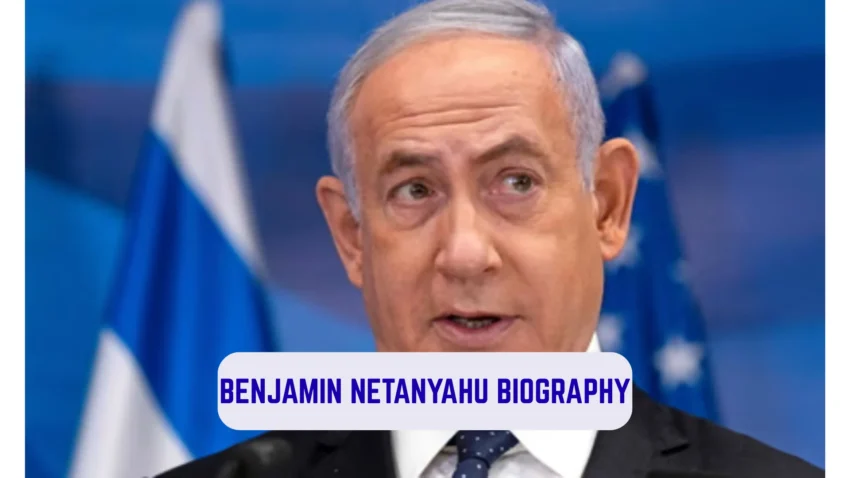
Benjamin Netanyahu is one of the most influential and controversial political figures in modern Israeli history.
Known for his long tenure as Prime Minister of Israel, his strong stance on national security, and his polarizing leadership style, Netanyahu has shaped Israel’s domestic and foreign policies for decades.
This comprehensive biography explores his early life, education, military service, political rise, major achievements, controversies, and lasting legacy.
Profile Data
- Full Name: Benjamin Netanyahu
- Born: October 21, 1949
- Age: 76 years old
- Birthplace: Tel Aviv, Israel
- Nationality: Israeli
- Occupation: Politician
- Religion: Judaism
- Parents: Benzion Netanyahu (father), Tzila Netanyahu (mother)
- Siblings: Yonatan Netanyahu (deceased), Iddo Netanyahu
- Spouse: Sara Netanyahu
- Children: Noa Netanyahu, Yair Netanyahu, Avner Netanyahu
- Relationship: Married
Early Life and Family Background
Benjamin “Bibi” Netanyahu was born on October 21, 1949, in Tel Aviv, Israel. He grew up in a family deeply rooted in Zionist ideology and Jewish scholarship. His father, Benzion Netanyahu, was a renowned historian and a leading scholar of Jewish history, particularly known for his work on the Spanish Inquisition. This intellectual environment significantly influenced Netanyahu’s worldview, especially his views on Jewish identity, history, and security.
In the early years of his life, Netanyahu spent time in the United States, where his father taught at various universities. This exposure gave him fluency in English and familiarity with American culture, which later became a defining advantage in his international political career.
A pivotal emotional influence in his life was the death of his older brother, Yonatan Netanyahu, who was killed in 1976 while leading the Israeli commando raid to rescue hostages at Entebbe Airport in Uganda. This event profoundly shaped Benjamin Netanyahu’s views on terrorism and national defense.
Education and Military Service
Benjamin Netanyahu completed part of his high school education in the United States before returning to Israel. He later enrolled at the Massachusetts Institute of Technology (MIT), where he earned a bachelor’s degree in architecture and a master’s degree in management studies. He also studied political science at Harvard University.
Before his academic career, Netanyahu served in the Israel Defense Forces (IDF), joining the elite Sayeret Matkal special forces unit. He participated in several high-risk counterterrorism missions and was wounded in combat. His military service became a cornerstone of his public image, reinforcing his reputation as a leader focused on security and strength.
Early Career and Entry into Politics
After completing his studies, Netanyahu worked as a consultant and later became involved in public diplomacy. He served as Israel’s Deputy Chief of Mission at the Israeli Embassy in Washington, D.C., and later as Israel’s Ambassador to the United Nations from 1984 to 1988.
During his time at the UN, Netanyahu became known for his articulate defense of Israel on the global stage. His strong communication skills, media presence, and command of English helped him build an international profile, setting the stage for his transition into Israeli domestic politics.
Rise Within Likud Party
Netanyahu officially entered Israeli politics in the late 1980s as a member of the Likud party, a right-wing political movement emphasizing national security, free-market economics, and skepticism toward territorial concessions.
In 1993, he was elected leader of Likud, becoming the youngest party leader in its history. His rise coincided with intense national debate over the Oslo Accords, which aimed to establish peace between Israel and the Palestinians. Netanyahu emerged as a leading critic of the accords, arguing they endangered Israeli security.
First Term as Prime Minister (1996–1999)
In 1996, Benjamin Netanyahu won Israel’s first direct election for prime minister, defeating Shimon Peres. At the age of 46, he became the youngest prime minister in Israel’s history.
His first term was marked by strained relations with the Palestinian leadership, cautious implementation of the Oslo Accords, and tensions with the United States. Netanyahu emphasized security, expanded settlements, and adopted a tough stance against terrorism. However, internal political conflicts and coalition instability weakened his government, leading to his electoral defeat in 1999.
Political Comeback and Return to Power
After a brief retreat from politics, Netanyahu returned as Minister of Finance from 2003 to 2005. In this role, he implemented significant economic reforms, including privatization, welfare cuts, and market liberalization. Supporters credit these policies with strengthening Israel’s economy, while critics argue they increased social inequality.
In 2009, Netanyahu returned to office as Prime Minister, marking the beginning of his longest and most influential period in power.
Long Tenure as Prime Minister (2009–2021)
Benjamin Netanyahu served multiple consecutive terms as prime minister, becoming Israel’s longest-serving leader. His leadership during this period focused on several key areas:
National Security
Netanyahu consistently emphasized the threat posed by Iran’s nuclear program, becoming one of its most vocal international critics. He opposed international agreements he believed failed to prevent Iran from acquiring nuclear weapons.
Foreign Relations
Under Netanyahu, Israel strengthened ties with several countries, including the United States, India, and Russia. One of the most notable achievements of his tenure was the Abraham Accords, which normalized relations between Israel and several Arab nations.
Economic Policy
Netanyahu promoted free-market policies, technological innovation, and foreign investment, contributing to Israel’s reputation as the “Startup Nation.”
Domestic Politics
Despite his successes, Netanyahu’s leadership was highly polarizing. Supporters viewed him as a strong protector of Israel, while opponents accused him of undermining democratic institutions and deepening social divisions.
Legal Challenges and Controversies
One of the defining aspects of Netanyahu’s later career has been his legal troubles. He faced multiple corruption charges, including bribery, fraud, and breach of trust. Netanyahu has consistently denied wrongdoing, claiming the charges are politically motivated.
These legal battles dominated Israeli politics for years, leading to repeated elections and political deadlock. In 2021, he was temporarily removed from office after failing to form a governing coalition, though he later returned to power.
Leadership Style and Public Image
Benjamin Netanyahu is known for his charismatic communication style, strategic thinking, and resilience. He is also criticized for confrontational politics and centralizing power. His ability to survive politically despite scandals and opposition demonstrates his deep influence within Israeli society.
Legacy and Historical Significance
Netanyahu’s legacy is complex and deeply debated. He is credited with strengthening Israel’s economy, enhancing its global standing, and prioritizing security. At the same time, critics argue his policies stalled peace efforts and weakened democratic norms.
Regardless of perspective, Benjamin Netanyahu remains one of the most consequential leaders in Israel’s history.
FAQs About Benjamin Netanyahu
Q1: Who is Benjamin Netanyahu?
Benjamin Netanyahu is an Israeli politician who has served multiple terms as Prime Minister of Israel and is the country’s longest-serving leader.
Q2: When was Benjamin Netanyahu born?
He was born on October 21, 1949, in Tel Aviv, Israel.
Q3: What political party does Netanyahu belong to?
He is a member and long-time leader of the Likud party.
Q4: Why is Benjamin Netanyahu controversial?
He is controversial due to his hardline policies, opposition to peace accords, and ongoing corruption trials.
Q5: What are Netanyahu’s major achievements?
His major achievements include economic reforms, strong security policies, and the Abraham Accords.
Conclusion
Benjamin Netanyahu’s biography reflects the story of modern Israel itself—marked by security challenges, political division, and rapid economic growth. Loved by supporters and criticized by opponents, Netanyahu’s influence on Israeli politics is undeniable. His leadership, controversies, and resilience ensure that his name will remain central to discussions about Israel’s past, present, and future.