
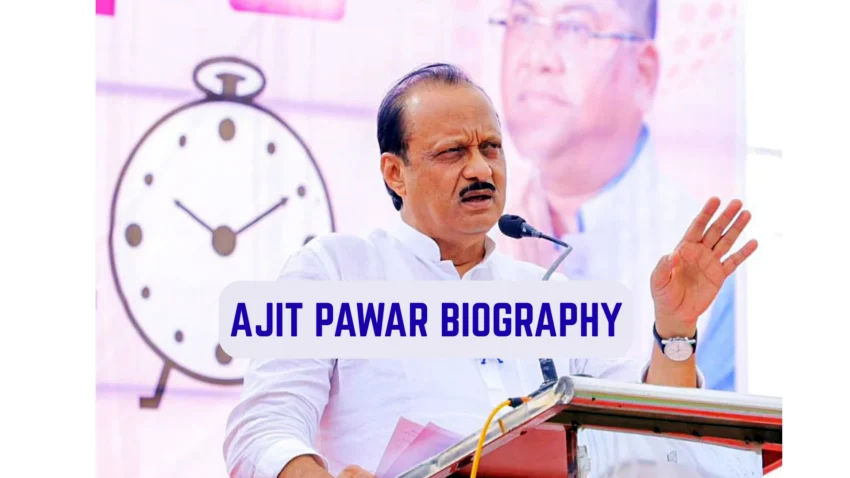
Ajit Anantrao Pawar was a towering figure in Maharashtra politics, known for his sharp administrative skills, fiscal expertise, and significant influence over the state’s governance for more than three decades. A leader whose decisions impacted millions, he remains one of the most influential politicians in India’s modern political history.
Tragically, his life and career ended unexpectedly in a plane crash near Baramati, Maharashtra on 28 January 2026, when the aircraft he was travelling in crashed while approaching the runway.
Profile Data
- Full Name: Ajit Anantrao Pawar
- Born: 22 July 1959
- Age: 66 (at time of death in 2026)
- Death: 28 January 2026 (plane crash)
- Birthplace: Deolali Pravara, Ahmednagar district, Maharashtra, India
- Nationality: Indian
- Occupation: Politician, Deputy Chief Minister of Maharashtra
- Parents: Anantrao Pawar (father), Ashatai Pawar (mother)
- Siblings: Brother Shriniwas; sister Vijaya (deceased)
- Spouse: Sunetra Pawar (married 1985)
- Children: Parth Pawar, Jay Pawar
- Net Worth: Approx ₹100–₹125 crore (est.)
Early Life and Family Background
Ajit Pawar was born on 22 July 1959 in Deolali Pravara, a village in the Ahmednagar district of Maharashtra. He came from a family with strong political roots — he was the nephew of Sharad Pawar, founder of the Nationalist Congress Party (NCP) and a veteran Indian statesman.
His father, Anantrao Pawar, was involved in local leadership but died when Ajit was only 18, forcing young Ajit to shoulder family responsibilities early in life.
Ajit grew up in Baramati taluka, where he developed a deep connection with rural issues and grassroots communities, especially farmers and cooperative movements, which became central to his later political ideology.
Education and Early Career
Ajit Pawar completed his schooling and became involved in local cooperative institutions early in his career. His formal political journey began through the cooperative movement — a key foundation of rural politics in Maharashtra.
He first gained public attention when elected to the board of a local sugar factory in 1982 and later became a key figure in the Pune District Central Cooperative Bank, serving as chairman for 16 years — a post that bolstered his political network in rural Maharashtra.
Entry into Electoral Politics
Ajit Pawar transitioned from cooperative leadership to electoral politics in 1991, winning the Baramati Assembly constituency. This seat became his political bastion — one he held for six terms without defeat.
His solid grassroots base and organizational network in western Maharashtra helped him rise rapidly within the state’s political hierarchy.
Political Career and Leadership Roles
Rise within the Nationalist Congress Party
Ajit Pawar was a senior leader within the Nationalist Congress Party (NCP), a party formed by his uncle Sharad Pawar in 1999 after splitting from the Indian National Congress. He played a central role in shaping the party’s strategy and growth in Maharashtra over the years.
Deputy Chief Minister and Key Portfolios
Ajit Pawar served as Deputy Chief Minister of Maharashtra multiple times across different governments, under leaders such as Prithviraj Chavan, Devendra Fadnavis, Uddhav Thackeray, and Eknath Shinde.
He held major portfolios including:
- Finance & Planning
- Water Resources
- Irrigation
- State Excise
- Rural Development
- Energy and Power
- Sports & Youth Welfare
Pawar’s reputation as a key economic strategist was cemented through his repeated role as Finance Minister, where he guided Maharashtra’s budget processes and fiscal planning for years.
Political Strategy and Influence
Ajit Pawar was known for his:
- Strong administrative skills
- Deep understanding of Maharashtra’s fiscal and rural issues
- Strategic role in coalition governments
- Ability to balance political alliances and legislative negotiations
His long career in public service made him a respected leader across party lines and within bureaucratic circles.
Controversies and Criticisms
Like many long-serving politicians, Ajit Pawar faced several controversies:
Irrigation Scam Allegations:
Accusations of irregularities in multi-crore irrigation projects surfaced during his tenure as irrigation minister. He consistently denied wrongdoing.
Family Land Deal Controversy:
Allegations surfaced around land acquired by his son, sparking criticism and investigations in some cases.
Despite these controversies, he maintained significant support among his core voter base.
Net Worth
As per his 2024 election affidavit, Ajit Pawar’s net worth was around ₹124 crore, including movable and immovable assets such as vehicles, investments, and land holdings.
His family also held substantial assets, with his spouse owning additional properties and investments.
Plane Crash and Legacy
On 28 January 2026, Ajit Pawar died tragically in a plane crash near Baramati airport, along with four others. The aircraft caught fire and crashed during landing, ending the life of one of Maharashtra’s most influential political leaders.
His death sent shockwaves across India’s political spectrum, with national leaders expressing grief and praise for his service.
Pawar’s legacy includes a long tenure in public office, deep engagement with rural and fiscal issues, and a strong organizational influence within Maharashtra politics.
FAQs
Who was Ajit Pawar?
Ajit Pawar was an Indian politician and multiple-term Deputy Chief Minister of Maharashtra.
When was he born?
He was born on 22 July 1959.
How did Ajit Pawar die?
He died in a plane crash near Baramati, Maharashtra on 28 January 2026.
What was his net worth?
His net worth was estimated at around ₹100–₹125 crore.
What roles did he hold?
He served as Maharashtra’s Deputy Chief Minister multiple times and held major portfolios including Finance, Planning, and Irrigation.
Conclusion
Ajit Pawar’s life reflects the story of a leader who rose from grassroots politics to become one of the most powerful figures in Maharashtra. Known for his fiscal acumen, administrative experience, and strategic mindset, he played a transformative role in state governance. Though his career was marked by controversy, his impact on Maharashtra’s political and economic structures is undeniable.
His sudden death marked the end of an era — and left behind a political legacy that will be studied for years to come.